

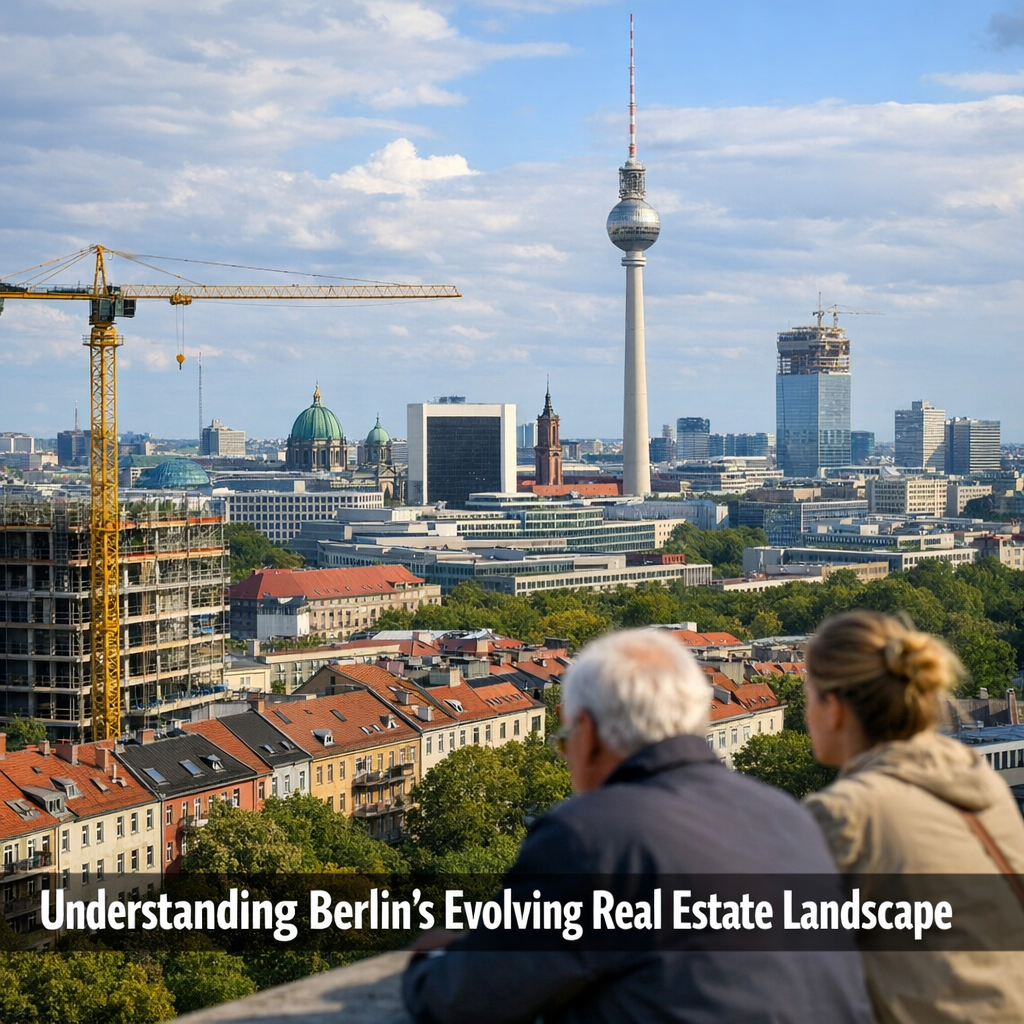
Berlin’s real estate market has experienced notable shifts in recent years, reflecting broader economic trends and local developments. This article provides an overview of current market dynamics, including rental trends, property prices, and ongoing development projects.
Rental Market Trends
After years of significant increases, Berlin’s rental market has shown signs of stabilization. In 2025, the average asking rent was €15.80 per square meter, marking a minimal rise of 0.1% compared to the previous year. This stabilization follows substantial hikes in prior years, with increases of over 18% from 2022 to 2023 and around 16% from 2023 to 2024. Despite this moderation, the demand for rental properties remains high, and the supply continues to be limited. Notably, in sought-after areas like Prenzlauer Berg, standard rental listings have become scarce, with a growing prevalence of furnished apartments and short-term rentals.
Property Prices
The market for condominiums has seen a slight uptick in prices. In 2025, the median asking price for condominiums was €5,813 per square meter, reflecting a 2% increase from 2024. This rise indicates a cautious recovery following previous declines influenced by changing interest rates. The ongoing housing shortage and sustained demand contribute to this upward trend in property values.
Development Projects
To address the housing shortage, several large-scale residential construction projects are underway, primarily located outside the S-Bahn ring and in the broader Berlin metropolitan area. These developments aim to alleviate the pressure on the housing market by increasing the supply of rental apartments. However, challenges such as high construction costs, financing difficulties, and lengthy permitting processes have constrained the pace of new constructions.
Conclusion
Berlin’s real estate market is currently characterized by a stabilization in rental prices, a modest increase in property values, and ongoing efforts to expand housing supply through new developments. While these trends suggest a maturing market, the persistent housing shortage underscores the need for continued investment and policy initiatives to meet the city’s growing demand for housing.