

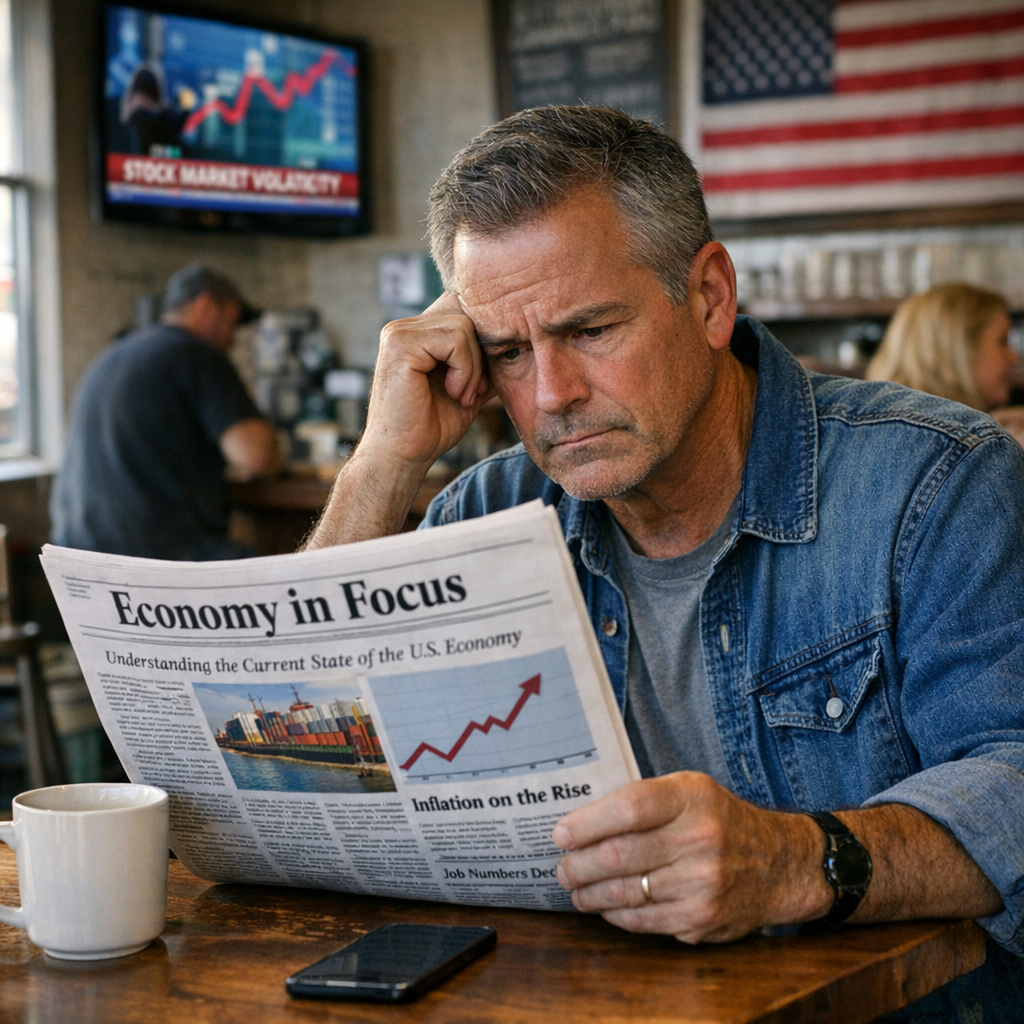
The United States economy has been navigating a complex landscape, marked by both growth and challenges. Recent data provides insight into the nation’s economic health and the factors influencing its trajectory.
Economic Growth and Employment
According to the International Monetary Fund (IMF), the U.S. economy is projected to grow by 2.4% in the fourth quarter of 2026, an increase from the previous year’s 2.2% growth. This uptick is accompanied by a decline in unemployment rates, expected to drop from 4.5% in late 2025 to 4.1% in 2026. Such trends suggest a resilient labor market and a steady economic expansion.
Inflation and Consumer Prices
Inflation remains a focal point for policymakers and consumers alike. The IMF anticipates that inflation will align with the Federal Reserve’s 2% target by 2027. However, recent events, such as the conflict in Iran, have led to a surge in gasoline prices, with the national average rising to $3.61 per gallon. This increase has placed additional financial strain on households, particularly those with lower incomes.
Federal Reserve Policies
The Federal Reserve has been actively managing monetary policy to balance economic growth and inflation. In 2025, the Fed reduced its benchmark interest rate three times, bringing it down to 3.6%. The IMF suggests that the Fed could consider further reductions to around 3.4%, provided the job market remains stable. Such measures aim to stimulate economic activity while keeping inflation in check.
Consumer Confidence and Spending
Consumer confidence has experienced fluctuations, influenced by various economic factors. A recent Gallup poll indicates that approximately one-third of Americans view politics and government as the nation’s most pressing issues, reflecting broader concerns about political stability and economic mobility. Additionally, retail sales data shows a modest increase of 0.2% in September, but when adjusted for inflation, actual spending decreased by 0.1%, highlighting the impact of rising prices on consumer behavior.
Conclusion
The U.S. economy demonstrates resilience through steady growth and declining unemployment. However, challenges such as inflation, rising consumer prices, and political uncertainties continue to influence economic dynamics. Ongoing monitoring and adaptive policies will be essential to sustain economic stability and address emerging issues.