

By Jonas Herrmann
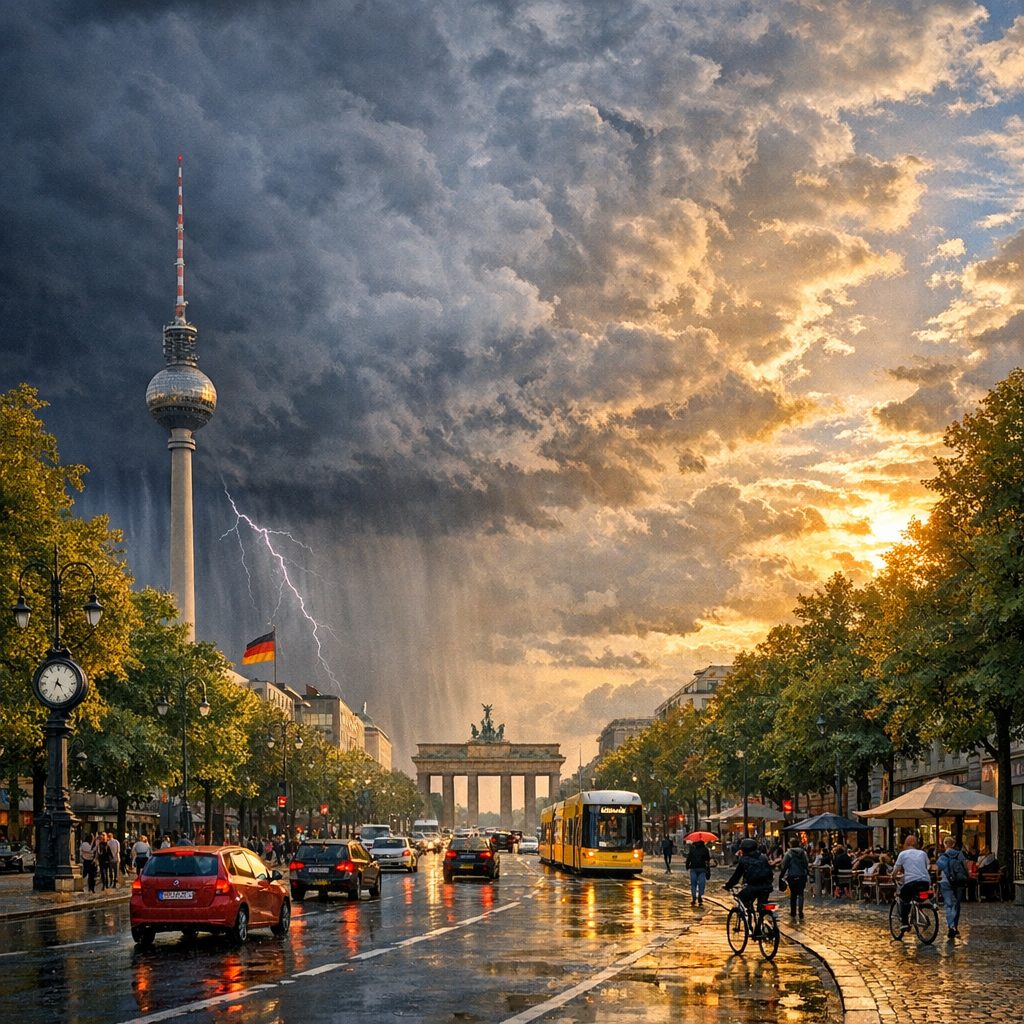
How Berlin’s Climate Is Shifting
Located in northeastern Germany on the European Plain, Berlin has a temperate climate with four distinct seasons and a wide seasonal temperature range. Over the past several decades, significant changes in this climate regime have become clear. Average temperatures have risen by over 1.5 °C compared to records from the early 20th century. Summers are becoming warmer, winters milder, and the number of frost days is decreasing substantially. Meanwhile, the growing season—when temperatures are favorable for plant growth—has lengthened by more than 30 days. These trends reflect both global climate change and local factors such as urbanisation and the city’s “heat island” effect.
Weather Normals & Seasonal Patterns
Using long-term data (1991-2020) helps us understand what to expect. July and August are now reliably Berlin’s warmest months, with average daily highs near 19-20 °C, while January is the coldest, dipping close to or slightly below freezing. Rainfall is spread throughout the year, though summer sees slightly more precipitation—July is typically the wettest month, April among the driest.
Environmental Impacts & Health Concerns
These shifts aren’t just numbers—they affect ecosystems and city life. Warmer summers lead to frequent “tropical nights” when temperatures stay high overnight, increasing stress on residents, especially the elderly. Dry spells in summer can worsen air quality, with pollutants and fine particles accumulating when air circulation is weak. On the flip side, heavier rainfall events can overload stormwater systems; basement flooding and water entering underground transit may occur during strong downpours.
Green Space, Urban Planning & Adaptation
Berlin has responded with policies targeting those challenges. Tree-planting campaigns, green roofs, and projects to turn parts of the city into “sponge landscapes” to absorb rainwater are gaining traction. The structure of urban development—building density, surface materials, street tree canopy—plays a central role in moderating heat and retaining water, so these interventions are increasingly part of city planning.
What Berliners Can Do
- Support efforts to increase tree cover and green space in neighbourhoods—shade helps reduce temperature peaks.
- Use appropriate clothing layers across seasons; nights, especially in winter, still get chilly.
- During summer heat and poor air quality days, limit outdoor exertion and follow public health advice.
- Lessen carbon footprint where possible—transport, energy use, consumption all matter.
Overall, Berlin is experiencing clear signs of climate change: warmer averages, shifting weather patterns, and growing environmental challenges. Thoughtful urban planning, public awareness, and community action can help make the city more comfortable, resilient, and healthy for everyone.