

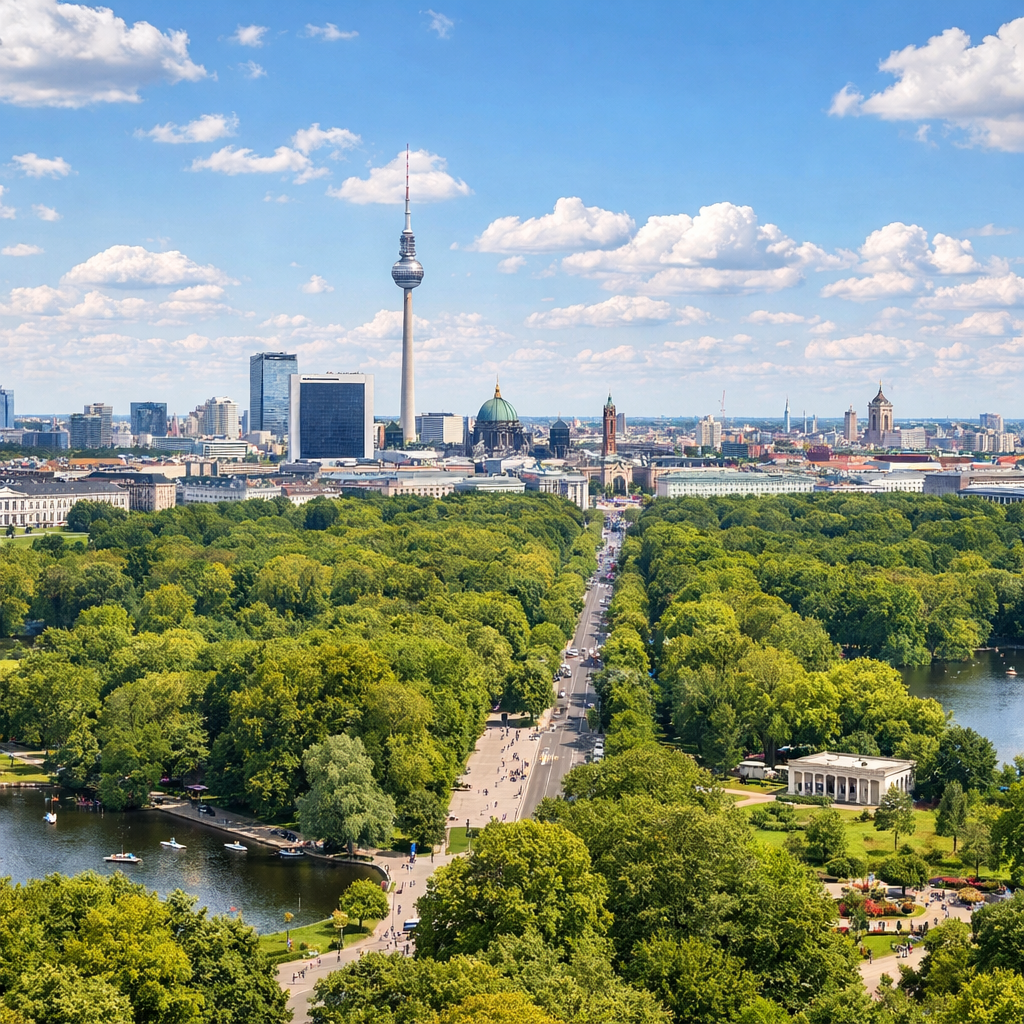
Berlin, renowned for its rich history and vibrant culture, is also distinguished by its abundant green spaces. Nearly 44% of the city’s land area comprises parks, forests, and waterways, offering residents and visitors alike a natural respite from urban life.
The Role of Green Spaces in Climate Mitigation
Urban greenery plays a crucial role in enhancing air quality, regulating temperatures, and providing habitats for diverse species. Trees and plants absorb carbon dioxide, release oxygen, and filter pollutants, contributing to a healthier urban environment. Additionally, green areas help mitigate the urban heat island effect by cooling the air through shade and evapotranspiration.
Notable Green Spaces in Berlin
Among Berlin’s numerous parks, the Tiergarten stands out as a central oasis. Spanning 210 hectares, it offers winding paths, boating lakes, and beer gardens, serving as a beloved retreat for both relaxation and recreation. Another significant area is the Tempelhofer Feld, the former airport turned public park, providing vast open spaces for various activities.
Urban Gardening and Community Initiatives
Berlin’s commitment to green spaces extends to urban gardening projects. Community gardens and allotments are scattered throughout the city, allowing residents to engage in gardening, foster community bonds, and promote local biodiversity. These initiatives not only enhance the city’s greenery but also empower citizens to participate actively in environmental stewardship.
Challenges and Future Prospects
Despite the extensive green coverage, Berlin faces challenges due to climate change. Rising temperatures and altered precipitation patterns can stress urban vegetation and affect biodiversity. To address these issues, the city is implementing strategies to enhance green infrastructure, such as planting climate-resilient tree species and creating green corridors to connect existing parks and natural areas.
In conclusion, Berlin’s green spaces are invaluable assets that contribute significantly to the city’s livability and resilience against climate change. Continued investment in and preservation of these areas are essential to maintain their benefits for future generations.