

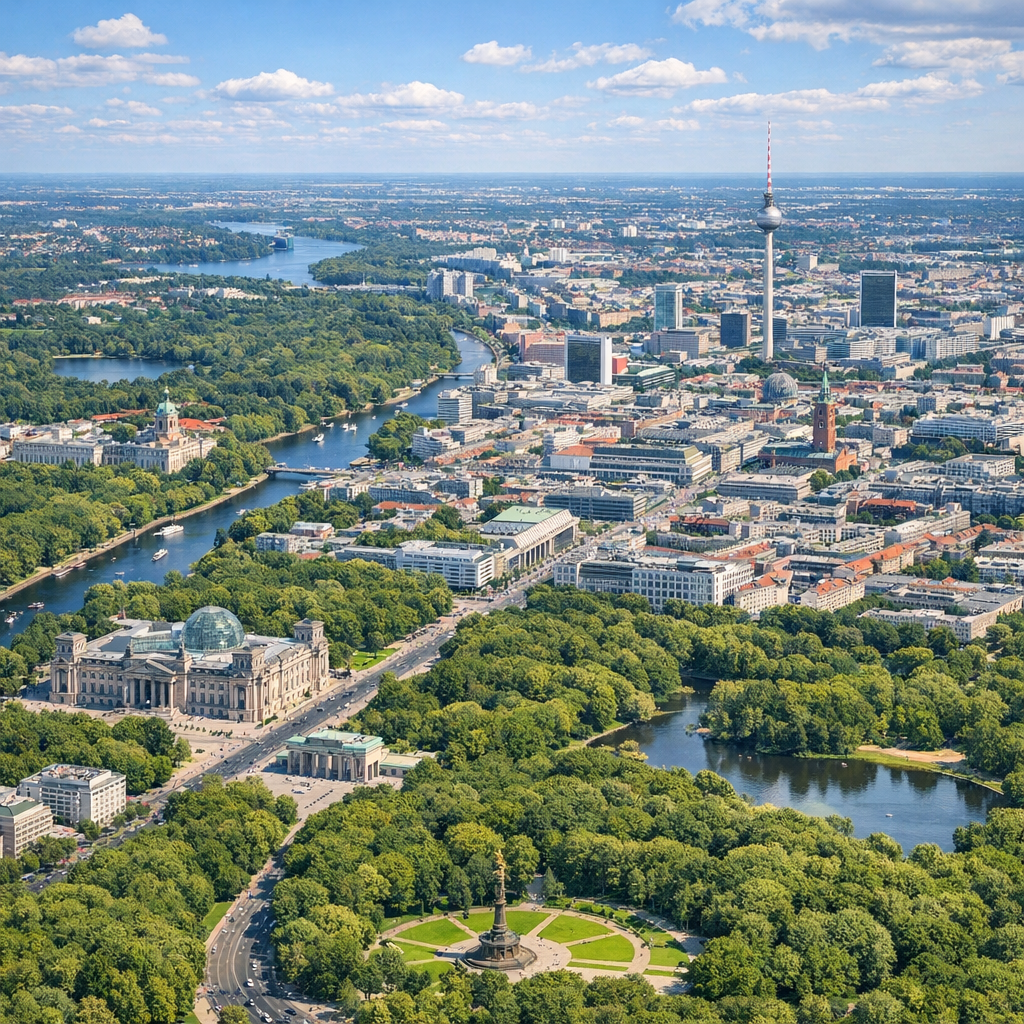
Berlin, renowned for its vibrant culture and history, is also distinguished by its abundant green spaces. Approximately 40% of the city’s area comprises parks, forests, and waterways, offering residents and visitors alike a natural respite from urban life. These green areas are not merely aesthetic enhancements; they play a crucial role in mitigating the impacts of climate change and improving the quality of urban living.
The Role of Green Spaces in Climate Mitigation
Urban greenery contributes significantly to regulating city temperatures. Trees and vegetation provide shade and cool the air through evapotranspiration, counteracting the urban heat island effect—a phenomenon where urban areas experience higher temperatures than their rural surroundings. This cooling effect is particularly vital during heatwaves, which have become more frequent and intense in Berlin over recent decades. Studies indicate that the city has experienced a warming trend of approximately 1.62°C since the late 19th century, underscoring the importance of green spaces in climate adaptation strategies.
Enhancing Biodiversity and Air Quality
Beyond temperature regulation, Berlin’s green spaces serve as habitats for diverse flora and fauna, promoting biodiversity within the urban environment. They also act as natural air filters, absorbing pollutants and improving air quality. The city’s commitment to maintaining and expanding these areas is evident in initiatives aimed at creating connectivity across the city and establishing a ‘green belt’ to prevent urban sprawl and protect natural habitats.
Community Engagement and Well-being
Green spaces offer more than environmental benefits; they are integral to community well-being. Parks and gardens provide venues for recreation, social interaction, and relaxation, contributing to physical and mental health. The presence of accessible green areas has been linked to reduced stress levels and increased physical activity among urban residents.
Looking Ahead
As Berlin continues to grow and face the challenges posed by climate change, the preservation and expansion of green spaces remain a priority. Urban planning strategies that incorporate green infrastructure are essential for building a resilient and sustainable city. By valuing and investing in its natural assets, Berlin not only enhances the quality of life for its inhabitants but also sets a precedent for urban environmental stewardship.