

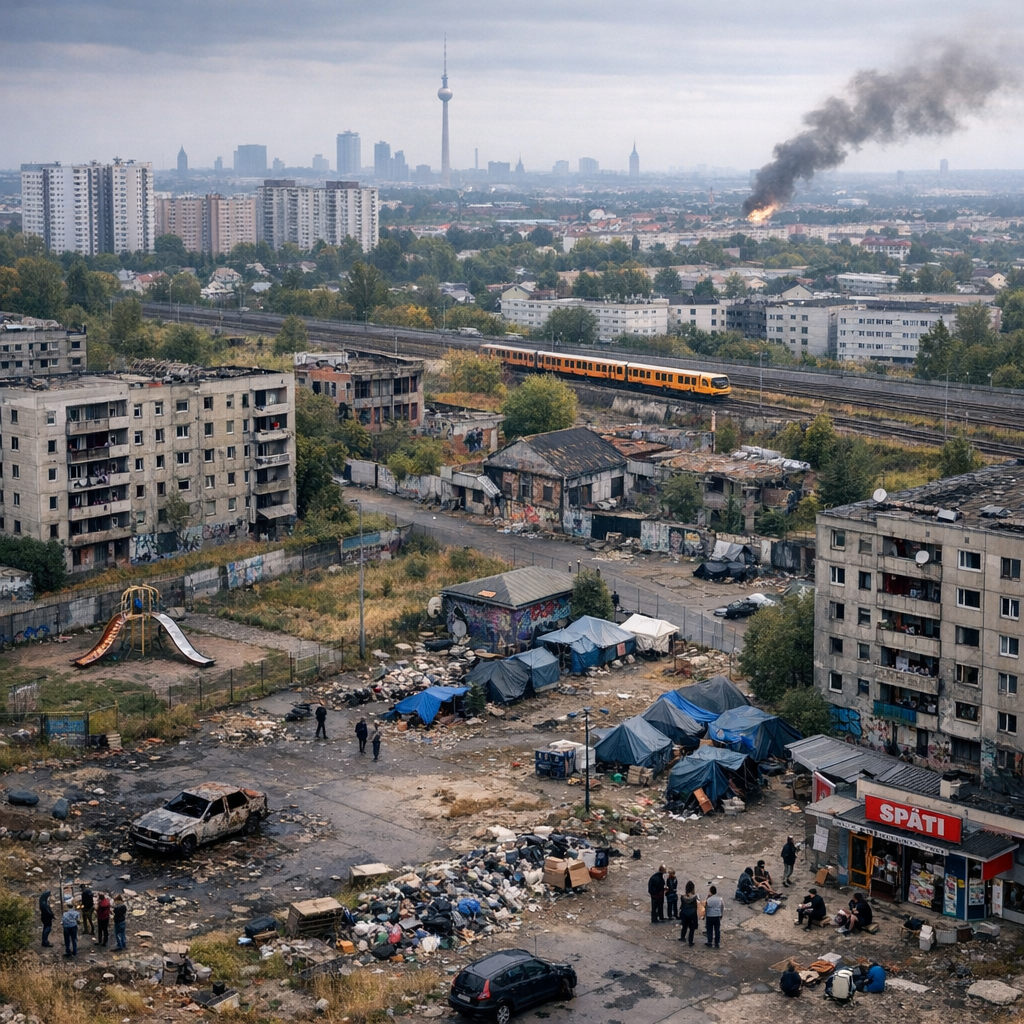
Berlin’s social landscape is undergoing significant changes, with the Senate recently identifying twelve new areas as social hotspots. These neighborhoods, primarily located on the city’s outskirts, are experiencing increasing social challenges that demand attention and action.
Identified Areas of Concern
The newly designated social hotspots include:
- Karower Chaussee (Buch)
- Griesingerstraße
- Im Spektefeld
- Westerwaldstraße (Falkenhagener Feld)
- Nonnendammallee (Spandau)
- Marienfelder Allee Nordwest (Marienfelde)
- Ortolanweg
- Goldhähnchenweg (Neukölln)
- Wittenberger Straße (Marzahn)
- Wartenberg Süd (Lichtenberg)
- Teichstraße
- Reinickes Hof (Reinickendorf)
These areas have been identified based on statistical analyses indicating concentrated social disadvantages. It’s important to note that this classification does not necessarily correlate with higher crime rates but rather focuses on socio-economic factors.
Community Reactions
Residents have expressed mixed feelings about these designations. For instance, Melanie, a 36-year-old resident of Karower Chaussee, was surprised by the classification, stating, “I don’t see this as a hotspot. There are areas in Berlin that are worse off.” Such sentiments highlight the complexity of labeling neighborhoods and the need for nuanced approaches to address their challenges.
Proposed Measures
In response to these developments, the Senate has outlined several initiatives aimed at supporting the affected communities:
- Enhancing support for youth welfare organizations
- Increasing staffing in childcare facilities
- Providing additional assistance for single parents
- Implementing neighborhood management programs
These measures aim to foster community development and provide residents with the resources needed to improve their living conditions.
Looking Ahead
As Berlin continues to evolve, addressing the needs of its diverse neighborhoods remains a priority. The identification of these new social hotspots serves as a call to action for policymakers, community leaders, and residents to collaborate in creating inclusive and supportive environments across the city.