

By Jonas Herrmann
Berlin’s Changing Climate: What We’re Already Seeing
Over the past century, Berlin’s average temperatures have risen by roughly 1°C. Summers are bringing more hot days and “tropical nights” (when overnight lows stay high), while frost and ice days during winter are becoming rare. These shifts are especially pronounced during prolonged dry spells and heatwaves. Meanwhile, rainfall amounts overall haven’t shifted dramatically — but dry periods followed by heavy downpours are becoming more common.
Key Environmental Risks for Berlin
Heat and Urban Overheating
The urban heat island effect results in higher nighttime temperatures across densely built-up areas compared to the surrounding countryside. In the Mitte–Tiergarten–Moabit region, for example, both air and surface temperatures have already increased due to recent building projects. Depending on development plans, some simulations suggest these areas could become 5–7°C hotter in summer afternoons within the next decade.
Water Scarcity and Spree River Stresses
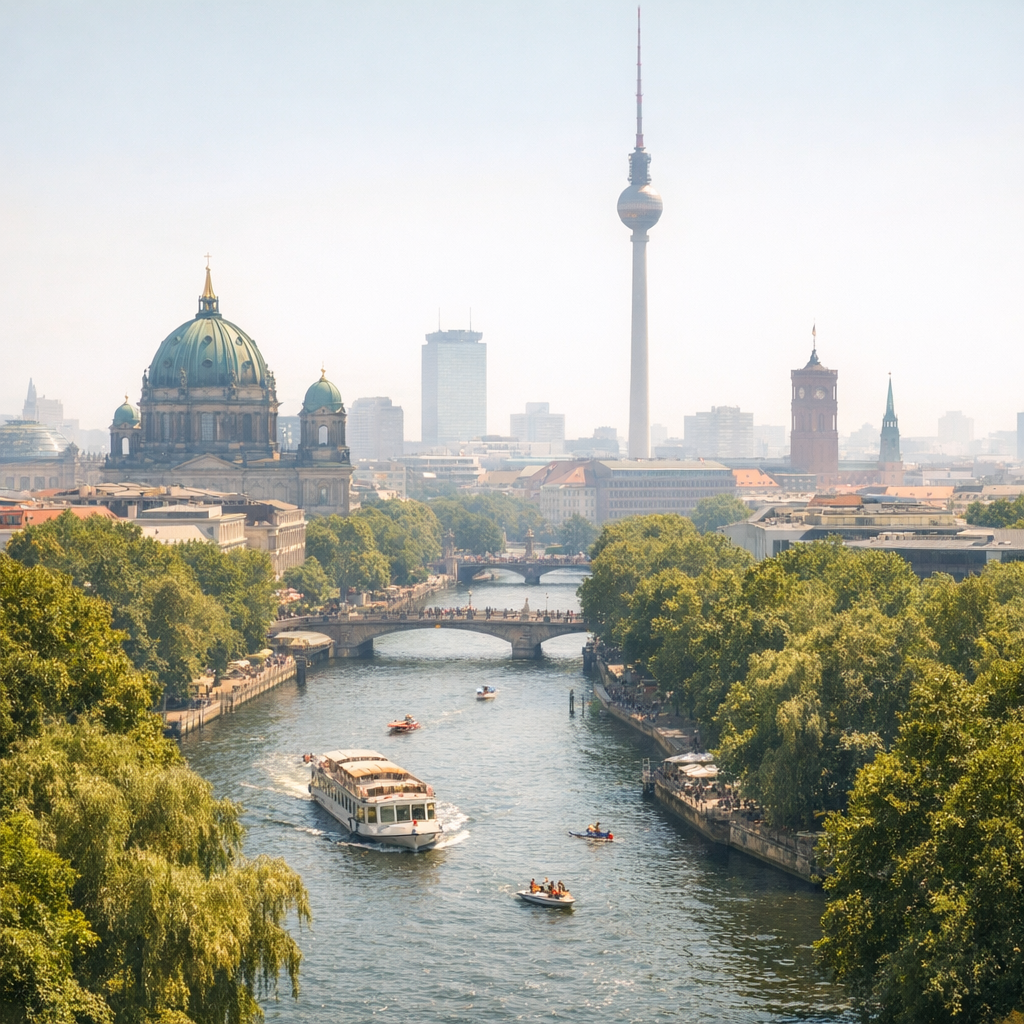
Berlin is seeing shrinking flows in the Spree: over the last 40 years, summer water volume has dropped by 60–70%. Contributing factors include reduced summer precipitation, increased water use in agriculture and industry upstream, and declines in groundwater recharge.
Floods and Stormwater Challenges
Built surfaces like asphalt and rooftops can’t absorb rainfall, increasing runoff during heavy storms. Berlin faces recurring issues with mixed sewer overflows and sometimes even flooding in underground transport during intense rainfall events—risks that are growing more serious with changing precipitation patterns.
Changing Ecosystems and Urban Nature
Berlin is notable for its green coverage: forests, parks, waterways, gardens, agriculture and allotments cover nearly 44% of the city. These areas help cool the city, absorb stormwater, and support biodiversity. But hotter and drier conditions stress trees, soil, and wetlands. Winters are milder—leading to pest risks—and seasonal patterns (blooming, breeding, leaf-out) are shifting.
What Policies and Plans Are in Motion
Berlin’s new Klimaanpassungsgesetz (Climatic Adaptation Law) requires a city-wide risk analysis, now released, to guide planning and investment. The Umweltatlas (Environmental Atlas) maps environmental indicators like heat exposure, green space, air quality, water balance, soil sealing—and lets citizens explore which neighborhoods are most vulnerable. Urban planning efforts are increasingly focused on preserving green corridors, restoring wetlands, and redesigning stormwater management.
What Residents Can Do
- Plant and care for trees and green roofs: even small patches of vegetation help reduce heat and improve air.
- Use water wisely—especially during summer droughts—to protect both individual gardens and the city’s broader water balance.
- Support local policies and initiatives that protect green space, reduce impervious surfaces, and promote sustainable transportation.
- Stay informed via tools like Berlin’s Umweltatlas to see how your neighborhood ranks in terms of heat, air quality, or flood risk.
Looking Ahead
While some degree of climate change is now unavoidable, the paths Berlin takes in urban design, infrastructure, and environmental protection will shape how severe effects will become. Continued warming, if unchecked, could push summers into territories once common only in more southerly European regions. But with thoughtful adaptation and strong policy, Berlin can maintain livability—preserving green life, clean water, and comfort for its people—as weather patterns evolve.