

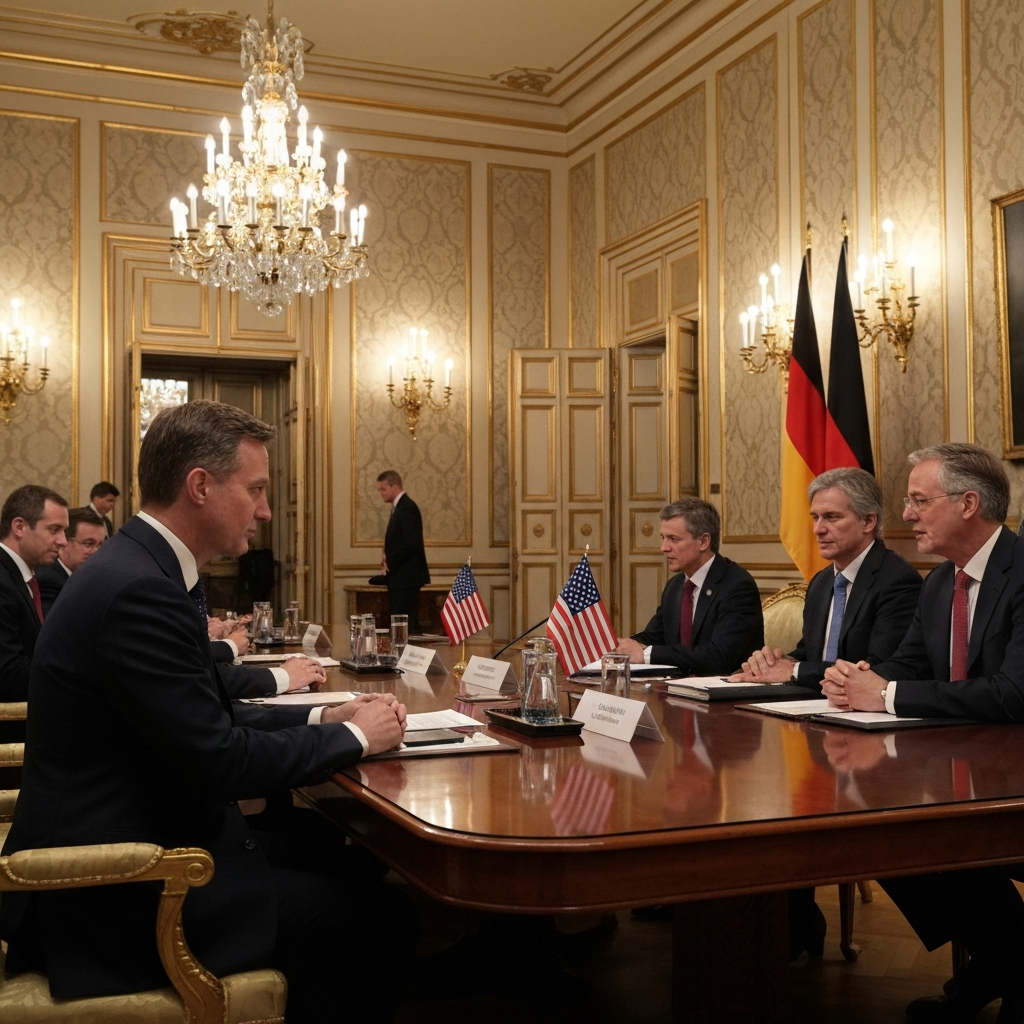
The relationship between the United States and Germany has long been a cornerstone of transatlantic cooperation, encompassing shared values, economic ties, and security commitments. However, recent developments have introduced complexities that both nations must navigate to maintain this partnership.
Economic Interdependence Under Strain
Germany’s economic ties with the U.S. are substantial. In 2025, the United States was Germany’s second most important trading partner after China. Since 2015, the largest share of German exports has consistently gone to the United States each year. With over 6,000 companies present in all 50 U.S. states, Germany is the third-largest investor in the United States. German companies and their subsidiaries are the fourth-largest foreign employer in the United States, providing some 870,000 jobs.
However, the Trump administration’s renewed tariff threats have raised concerns in Germany. In February 2025, U.S. Vice President J.D. Vance signaled a break from traditional economic cooperation between the U.S. and Europe, causing unease among German businesses.
Security and Defense: A Call for European Autonomy
On the security front, German Chancellor Friedrich Merz has advocated for Europe to boost its defense spending and reduce reliance on the United States, warning that American support is no longer guaranteed. Speaking in Berlin, he emphasized the need for strategic independence, resilience against hybrid threats, and long-term support for Ukraine. Germany is targeting 2.4% of its gross domestic product (GDP) on defense-related spending this year and increase it gradually to 3.5% by 2029.
Public Perception and Diplomatic Challenges
Public opinion reflects these tensions. A Pew Research Center survey from November 2025 indicated that German views of the U.S.-Germany relationship have turned sharply negative, with most Americans describing the relationship as good, although fewer do compared with last year.
Diplomatic incidents have further strained relations. In March 2025, a clash between Ukrainian President Zelenskyy and U.S. President Trump prompted Germany to reassess its ties with the U.S., highlighting concerns over Europe’s security architecture.
Looking Ahead: Navigating a Complex Partnership
As Germany and the United States approach the eightieth anniversary of the end of the Second World War, their relationship stands at a crossroads. While historical ties remain strong, both nations must address current challenges to sustain their partnership. This involves balancing economic interests, redefining security commitments, and fostering mutual understanding amid evolving political landscapes.
For Germany, this may mean pursuing greater strategic autonomy while maintaining open channels with the U.S. For the United States, recognizing and respecting Europe’s aspirations for self-reliance could lead to a more balanced and resilient transatlantic alliance.